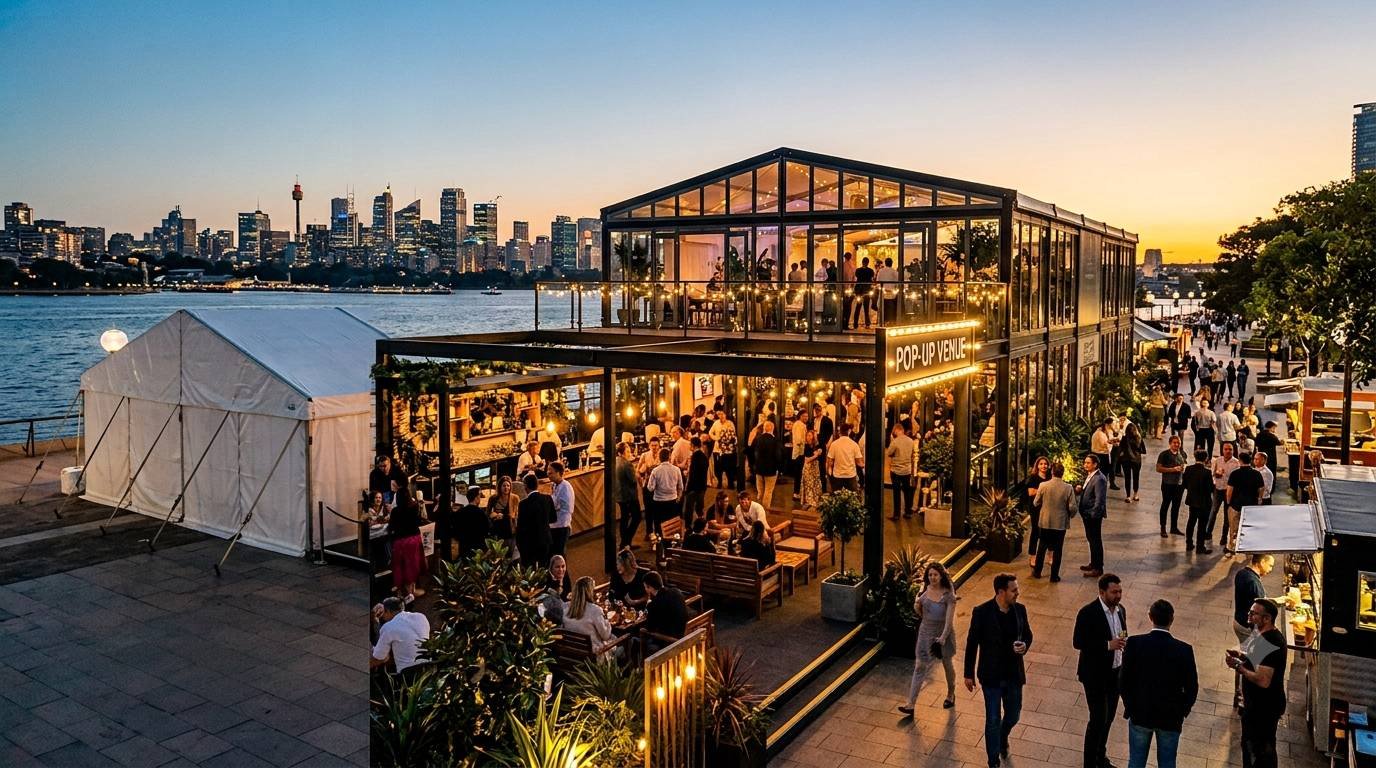

Pop-up venues must be quick to install, visually distinctive and suitable for their intended setting. While marquees remain useful for many events, an inflatable structure may offer stronger branding, a more unusual shape and simpler repeat use. The right option depends on purpose, location, audience, budget and practical site conditions.
Temporary venues are no longer limited to conventional tents and marquees. Brands now need event spaces that attract attention, reflect campaign artwork and work across different locations. Custom inflatable buildings can provide a distinctive alternative for exhibitions, product launches, promotions and public events, with designs shaped around specific dimensions and visual requirements. They can be installed indoors or outdoors and reused for later campaigns when properly specified and maintained. A marquee still has clear strengths, particularly for large hospitality layouts. The better choice depends on how the space will be used, how quickly it must open and what visitors should remember.
Start With the Venue’s Main Purpose
Before comparing structures, define what the pop-up venue must achieve. A hospitality space, promotional display and product-launch environment will each have different demands.
Consider how many people may enter, what equipment will sit inside and whether staff need room to speak with visitors. Access points, internal height and usable floor area should be discussed early.
A marquee often suits events that need a broad, familiar space for tables, seating or catering. An inflatable structure may be more appropriate when the venue itself must become part of the campaign.
Choose Visibility Over Convention
Marquees are widely recognised, but their familiar appearance can make them harder to distinguish at crowded events. Branding can be added, though the basic shape usually remains conventional.
A custom inflatable structure can be created around a particular size, shape, logo or visual idea. Domes, cubes and more unusual building forms can make the venue easier to identify across a busy showground or exhibition hall.
Strong design should still serve a practical purpose. A bold shape has limited value if entrances are unclear, branding cannot be read or the interior does not support the planned activity.
Compare Set-Up Requirements Carefully
Inflatable structures are made to be comparatively easy to set up, but organisers should never assume that inflation is the only task involved. The structure still needs an appropriate site, power arrangements and secure installation.
Ask who will handle transport, positioning, inflation and packing. Confirm the expected installation time and check whether trained staff or specialist equipment will be required.
Marquees can involve frames, panels, flooring and several installation stages. This may suit a longer event, but it can be less practical for a short promotional appearance or a campaign moving between venues.
Treat Branding as Part of the Structure
For a campaign-led pop-up, branding should influence the venue from the beginning. Adding graphics after the structure has been selected may create an awkward result.
Custom inflatable buildings can be developed through consultation, design approval and production. A professional visual mock-up can help organisers assess the proposed shape, artwork or logo before manufacturing begins.
Keep the message simple enough to understand from a distance. Decide which side will face the main visitor route and check that doors or curved areas do not interrupt essential wording.
Check Indoor and Outdoor Suitability
Inflatable venues can be used inside or outside, but the setting affects every decision. Indoor organisers must confirm ceiling height, floor space, access routes and venue rules.
Outdoor events need closer attention to weather, ground conditions, anchoring and power. Ask the supplier what operating limits and installation requirements apply to the proposed structure.
A structure should never be selected only because it looks impressive in an image. Site approval, risk planning and safe operation must come before visual impact.
Consider Storage and Repeat Use
A reusable structure may offer better long-term value when it supports several exhibitions, launches or seasonal campaigns. This depends on suitable storage, careful handling and branding that remains relevant.
Avoid artwork tied to a single date unless the structure has a one-off purpose. A core brand design may remain useful for longer, while temporary signs can carry event-specific information where suitable.
Ask how the deflated structure should be packed, moved, cleaned and stored. Include these practical costs when comparing it with repeated marquee hire.
Know When a Marquee Is Still Better
An inflatable venue is not the right answer for every event. A marquee may be preferable for a formal reception, large dining area or layout requiring conventional walls, furniture and service zones.
A marquee may be easier to divide into familiar sections or extend for a large guest capacity. Existing venue suppliers may already have approved plans for common marquee formats.
Choose an inflatable structure when distinctive appearance, campaign branding and repeat promotional use carry greater weight. Choose a marquee when a traditional, flexible hospitality space is the main requirement.
Frequently Asked Questions
Can an inflatable venue be used indoors?
Yes, subject to suitable floor space, ceiling height, access, power and the venue operator’s rules.
Are inflatable structures suitable for outdoor events?
They can be used outdoors when the model, site conditions and installation method are appropriate. Confirm weather limits and anchoring requirements with the supplier.
Can the structure match existing brand artwork?
Custom designs can reflect specified shapes, dimensions, logos and campaign visuals. Artwork should be approved before production.
Is an inflatable building cheaper than a marquee?
Not in every case. Compare design, manufacture or hire, installation, transport, storage and expected reuse rather than the initial price alone.
How early should organisers begin planning?
Begin once the event purpose, location and date are known. Consultation, design approval, production and site checks all require sufficient time.
The Takeaway
A temporary venue should support the event rather than simply cover it. Marquees remain a sound choice for traditional hospitality, broad floor plans and formal guest spaces. Inflatable structures become attractive when the building must capture attention, carry distinctive branding and travel between campaigns.
Organisers should compare more than appearance. Site access, capacity, installation, power, weather planning, storage and future use all affect the final decision. Early consultation helps turn a visual concept into a practical specification, while design approval reduces the risk of costly changes later.
The strongest pop-up venues make their purpose clear before visitors enter. When a memorable exterior, custom shape and reusable promotional asset matter more than a conventional event layout, carefully planned inflatable buildings can offer a persuasive alternative to hiring a marquee.